K4B4G1646E-BCNB DDR3 4Gb: Complete Specs & Pinout Guide
2026-05-22 09:59:27
0
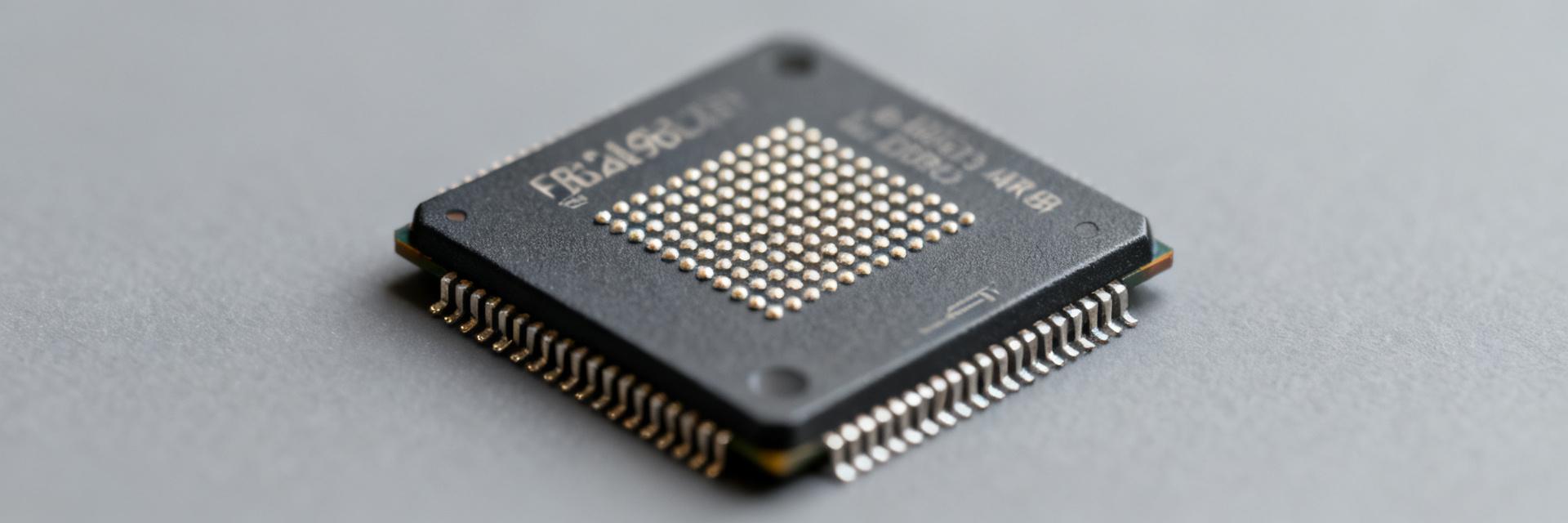
The K4B4G1646E-BCNB part is a 4‑Gbit DDR3 SDRAM in a 96‑ball FBGA package that maps to a 256M x16 organization, yielding 512 MB per device. This introduction outlines density, electrical and timing characteristics, and a clear FBGA pinout workflow so engineers can evaluate fit, routing complexity, and validation requirements before board spin. Refer to the official device datasheet and JEDEC DDR3 timing tables for exact numeric extraction. 1 Product snapshot: key specs & package (background) — Density, organization & memory class Point: The device implements a 256M x16 organization that equals 4 gigabits of storage, providing 512 megabytes single‑chip capacity for a single 16‑bit DDR3 channel. Evidence: This organization supports one x16 connection to a memory controller and is commonly used where a compact, single‑chip memory bank is needed. Explanation: For controllers that present a 16‑bit data bus, one device delivers full width; for 32‑bit controllers two devices per rank are required. — Package, ball count & nominal voltages Point: The package is a 96‑ball FBGA (FBGA96) with a compact BGA footprint optimized for high pin density. Evidence: Typical FBGA96 footprints use a grid with nominal ball pitch in the range common to small BGA packages, and designers should verify exact outline in the datasheet. Explanation: Nominal VDD and VDDQ are 1.5 V for standard DDR3; VREF is derived as a mid‑point reference for input receivers. Check temperature grade and supply tolerances in the datasheet before layout. 2 Electrical characteristics & absolute limits (data analysis) — Power rails, standby currents & I/O characteristics Point: Key power rails are VDD (core) and VDDQ (I/O); standby and suspend currents vary by device speed grade and operating temperature. Evidence: Typical behavior shows significantly lower current in self‑refresh versus active modes, which affects power budgeting for battery or low‑power systems. Explanation: I/O signaling levels follow DDR3 conventions with a required VREF at roughly half VDDQ; if ECC or ODT pins are present, their state affects termination and idle power and must be accounted for in the PDN. — Absolute maximum ratings & recommended operating conditions Point: Absolute maximum voltages and thermal limits define non‑recoverable stress boundaries; recommended operating ranges limit performance degradation. Evidence: Datasheet tables list absolute max VDD/VDDQ and recommended ambient and junction ranges; designers must not operate near absolute limits. Explanation: Decoupling strategy is critical: place high‑frequency ceramic caps (0.01–0.1 μF) at each VDD/VDDQ ball with via proximity, and use bulk (1–10 μF) caps on the board rail to stabilize slower transients. 3 Timing & performance deep-dive for DDR3 4Gb (data analysis) — Core timing parameters (tCL, tRCD, tRP, tRAS) Point: CAS latency (tCL), tRCD, tRP and tRAS determine access timing; speed grade (e.g., DDR3‑1600/1866/2133) indicates transfer rate in MT/s. Evidence: For DDR3‑1600, the device runs at 800 MHz clock (double data rate yields 1600 MT/s) so tCK ≈ 1.25 ns; tCL multiplied by tCK yields absolute CAS delay. Explanation: Use tCK and advertised CL to compute tCL in nanoseconds, then budget controller timing windows and PHY training margins from those numbers for reliable operation. — Throughput, latency and system impacts Point: Peak theoretical throughput equals bus bytes per transfer × transfer rate; for a x16 device that is 2 bytes × MT/s. Evidence: At 1600 MT/s a single x16 device can deliver up to ~3.2 GB/s peak (2 × 1600 million), before accounting for refresh and command overhead. Explanation: Real‑world throughput is reduced by refresh cycles, precharge/act commands and interleaving; random access latency dominates small transfers while sequential bursts approach peak efficiency. Measure with memory controller counters and eye tests. 4 FBGA96 pinout & ball map: how to read and document it (method guide) — Interpreting the official ball map Point: A ball map groups signals into DQ/DQS, BA/ADDR, CMD/CTL, CKE/ODT, VSS/VDD and NC/DIAG; reading coordinates maps physical location to function. Evidence: Ball coordinate notation (row/column or alphanumeric grid) in the datasheet lets you create a table mapping coordinate → net name → function → routing class. Explanation: Produce a clear table with each ball coordinate, the assigned signal, short function description, and routing priority (e.g., critical timing, power, or NC) to guide PCB layout and DFM checks. Ball Coord Signal Function Routing Class A1 VDD Core supply Power — decouple locally B2 VSS Ground Return — via stitching C3 DQ0 Data bit 0 Timing critical — length match D4 DQS0 Strobe for DQ0–7 Timing critical — match to byte lane — Pinout best practices Point: Treat NC balls as mechanically present but electrically unconnected unless datasheet states otherwise; plan testpoints for critical nets. Evidence: Power/ground balls require capacitors placed within millimeters of the ball, while unused balls should be documented and masked in PCB fab notes. Explanation: Add test points for DQS and command lines for debug, annotate the redrawn manufacturer ball map with PCB net names, and ensure via keepout and via stitching follow return path best practices. 5 PCB integration checklist High-speed routing: Controlled impedance, close DQ–DQS pairing, and length matching. Evidence: Mandate matching within byte lanes and preserving DQS as reference. Explanation: Route DQS as differential-like, keep DQ parallel, use serpentine tuning, and isolate from data bus. Power & Thermal: Decouple VDD/VDDQ with local ceramics; bulk on board. Evidence: 0.01–0.1 μF mix per pin is standard. Explanation: Place caps within 1–3 mm, use ferrite beads for VTT, and add via arrays for thermal conduction. 6 Validation & troubleshooting Functional checklist: Presence checks, R/W integrity, margining and refresh behavior. Evidence: Sequential/random sweeps and PHY margining. Explanation: Use oscilloscope with DDR probe, measure VREF, and monitor error counters during frequency sweeps. Common faults: Boot failures or intermittent errors. Evidence: Usually caused by power/decoupling, VREF issues, or routing. Explanation: Verify rails, confirm VREF, check decoupling placement and byte lane matching; check firmware if HW is correct. 7 — Variant notes, cross-referencing & replacement guidance — Understanding suffixes and device variants Point: Suffixes on part numbers commonly indicate speed grade, package revision or temperature classification and must be decoded per datasheet. Evidence: Two devices with the same root number may differ in timing or temperature range despite identical organization. Explanation: Always compare full ordering codes and datasheet parameter tables to confirm speed grade and operating envelope before approving a substitution for production. — Safe drop-in replacements and compatibility checks Point: A valid replacement must match organization (256M x16), VDD/VDDQ, pinout, and timing class to be considered drop‑in. Evidence: Even small timing or termination differences can require controller reconfiguration or PCB revisits. Explanation: Checklist: verify organization and density, confirm identical FBGA96 ball map, check VREF/termination needs, and test the candidate device in a controlled lab setup before field deployment. Summary The K4B4G1646E-BCNB provides DDR3 4Gb density in a FBGA96 footprint; verify the 256M x16 organization equals 512 MB and plan for x16 channel integration with proper timing and PDN considerations. Pinout discipline is essential: redraw the official ball map into a table mapping coordinate → signal → function → routing class, and place local decoupling close to each VDD/VDDQ ball to safeguard signal integrity. Use the PCB checklist and validation vectors above to reduce integration risk, prioritize DQS/DQ length‑matching per byte lane, and validate VREF and termination on the bench before firmware bring‑up. Frequently Asked Questions What is the capacity and organization of K4B4G1646E-BCNB in DDR3 4Gb terms? The K4B4G1646E-BCNB is organized as 256M ×16, which equates to 4 gigabits or 512 megabytes per device. That organization means the part is intended for a single x16 DDR3 channel; controllers expecting x8 or x32 must account for device count and rank configuration. Does the FBGA96 pinout require special handling for unused balls and test access? Yes. Mark N/C balls per the datasheet, avoid routing beneath them unless specified, and add test points for critical nets such as DQS and command lines. Local decoupling and return path via stitching near power/ground balls are mandatory for stability and debug access. How do I estimate peak throughput for a DDR3 4Gb x16 device in a system? Compute peak as bytes per transfer (2 bytes for x16) multiplied by transfer rate in MT/s (e.g., 1600 MT/s yields ~3.2 GB/s). Subtract practical reductions for refresh cycles, command overhead, and controller inefficiencies; measure with counters and burst tests to determine usable bandwidth.
READ MORE